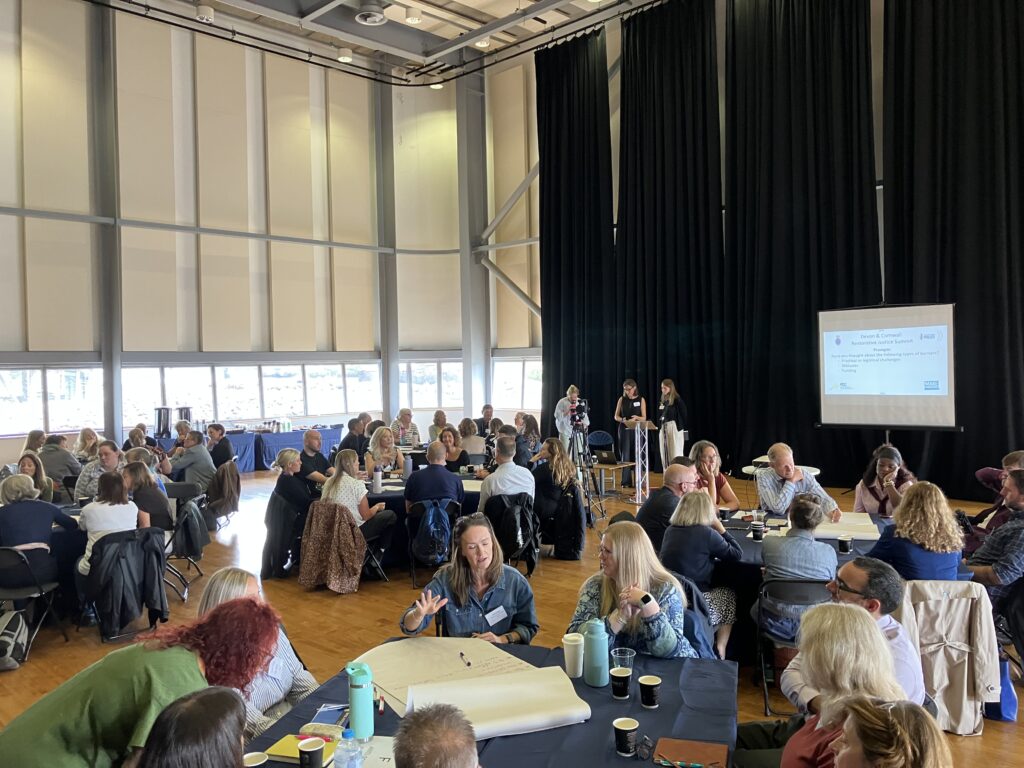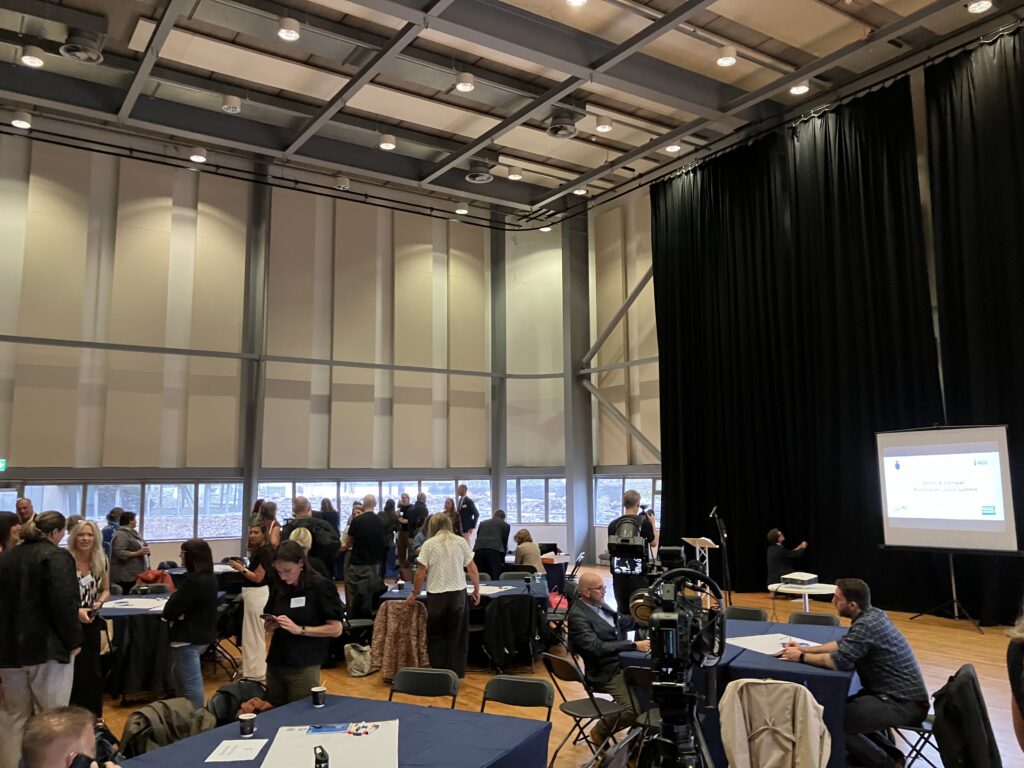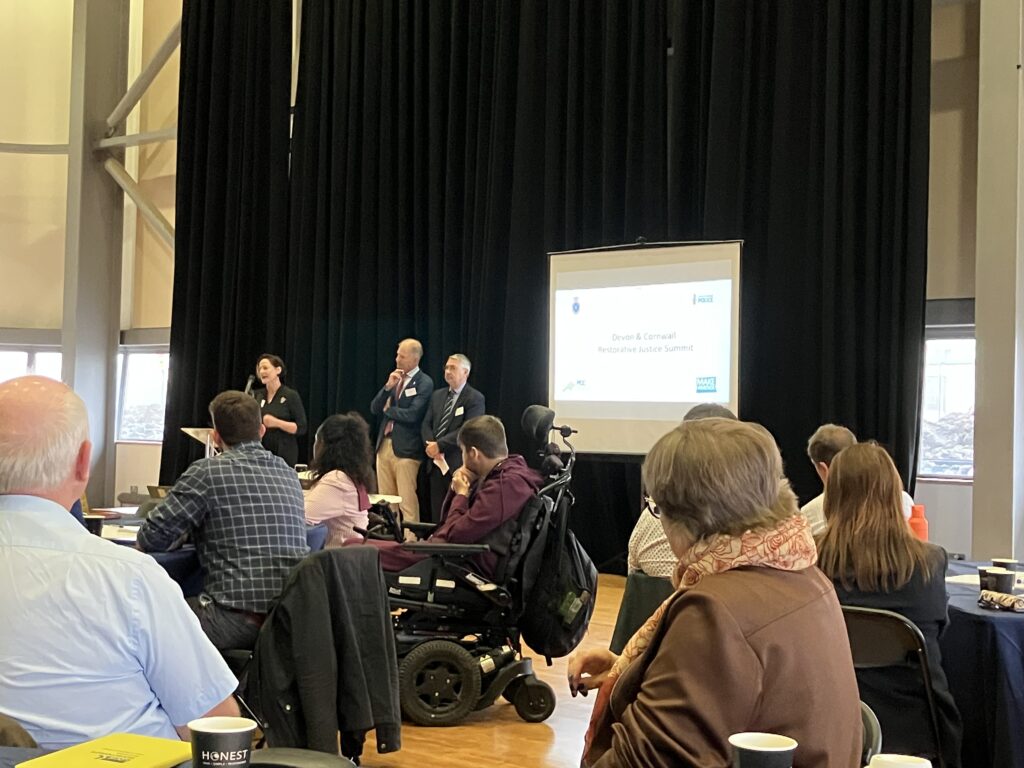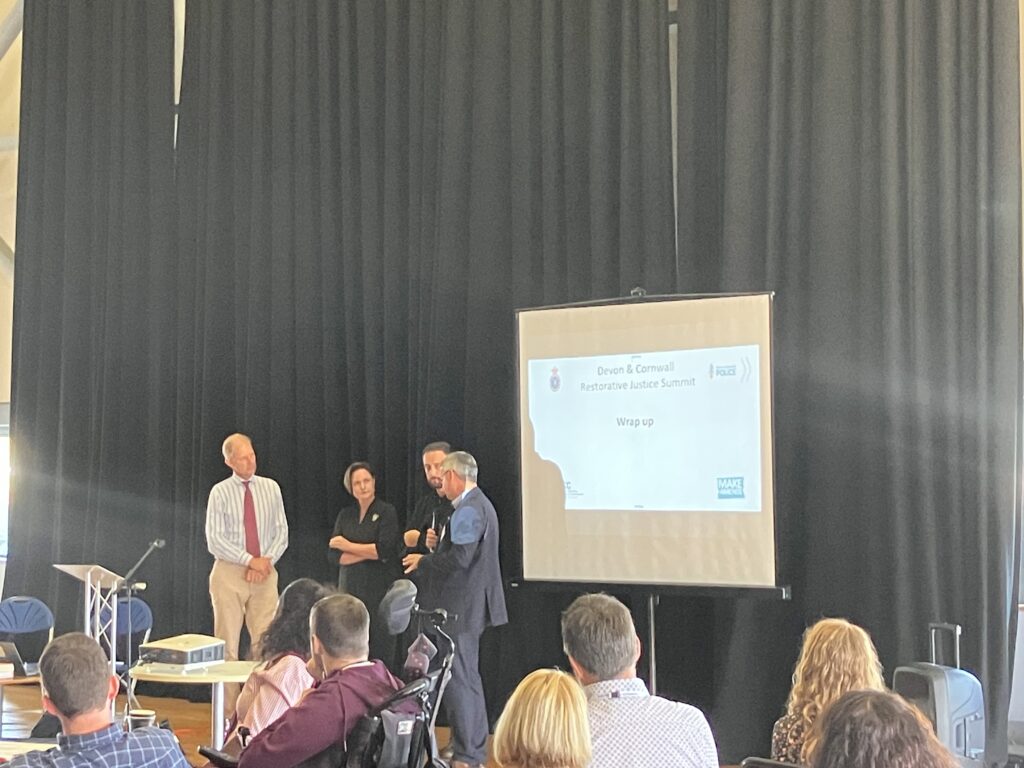
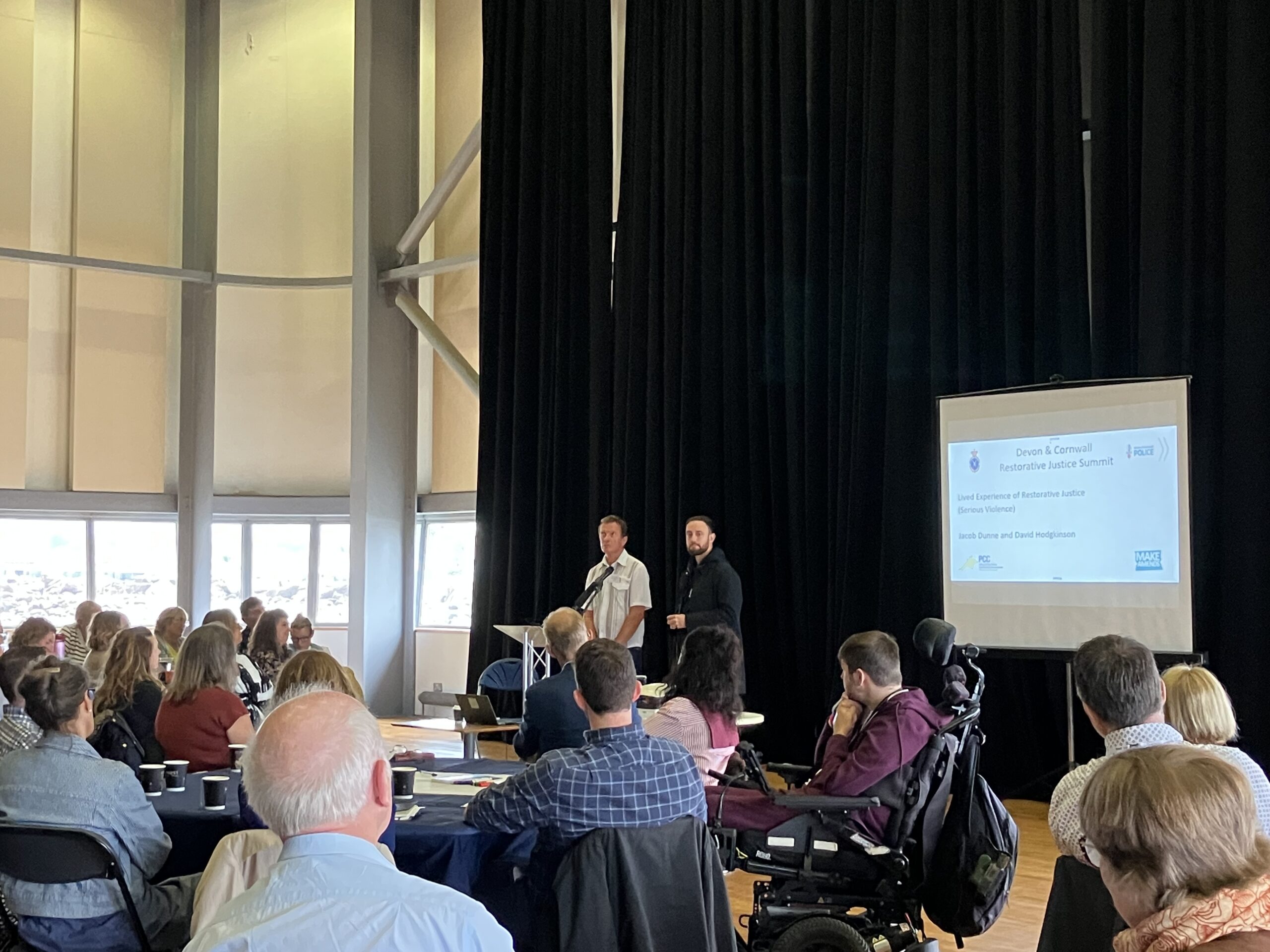
Devon’s High Sheriff Mark Ansell has made Restorative Justice the focus of his year in office and alongside Devon and Cornwall Police’s Chief Constable, James Vaughan, Police and Crime Commissioner Alison Hernandez, and Make Amends, hosted key stakeholders from across the criminal justice system to look at how to increase the numbers of victims and offenders accessing RJ.
He was inspired to choose Restorative Justice after listening to Amol Rajan’s interview with Jacob Dunne on a BBC podcast. Jacob’s story inspired the play PUNCH and now he and the parents of James Hodgkinson, who he killed with a single punch on a night out, are key campaigners in the field of Restorative Justice.
Mark commented – “Right now an RJ process is activated in Devon and Cornwall in an estimated 4 in 1,000 cases. After seeing the brilliant play PUNCH at Theatre Royal Plymouth together in April, the Chief Constable, the Police and Crime Commissioner and I agreed that this should and could be changed to more like 4 in 100. Crucially, this is about empowering victims of crime. While we understand in some instances there’s no suspect, or the victim doesn’t want to go ahead, or other reasons why it doesn’t happen, we all think RJ can and should happen more.”
For Lucy Evans, Make Amends Service Manager, the ambition for the summit was for it to be a turning point for restorative justice in Devon & Cornwall; to explore what people are being told about RJ, whether professionals are confident enough to raise the offer, are there groups who are less likely or able to access it, and is it clear what good RJ looks like?
The stories of those with lived experience of amazing successful RJ were shared by the people themselves – Julie Marks and her son Seth, who was seriously injured in a traffic collision with his friend driving, talked about their RJ work with that friend through Make Amends, and Jacob Dunne and David Hodgkinson spoke about the death of David’s son James and their restorative journey. Paula Reynolds explained how she was repeatedly blocked from and denied RJ with the man who attacked her son in a nightclub and the barriers she came up against, and Janika Cartwright talked about her hard-won RJ process in a domestic violence case despite services, in her words, ‘deciding what was right for her’ without her voice being heard.
Paula summarised: “I am concerned that the outcome of being denied or unable to access a restorative solution may result in people seeking out their own contact, which I am worried would then not be monitored or overseen and may ultimately increase future risk. Involving those harmed empowers victims and helps prevent the process causing further hurt and retraumatising people further.”
With so many professionals committed to supporting people affected by crime in one room, discussing and workshopping real implementable improvements to restorative justice access, the momentum is hopefully now with us to take the service to new heights.
Referrals for RJ can be made from the police, prisons, the youth justice service, councils, the NHS, education settings and other support services as well as self-referred.